01The brief
A website to explain how buying works
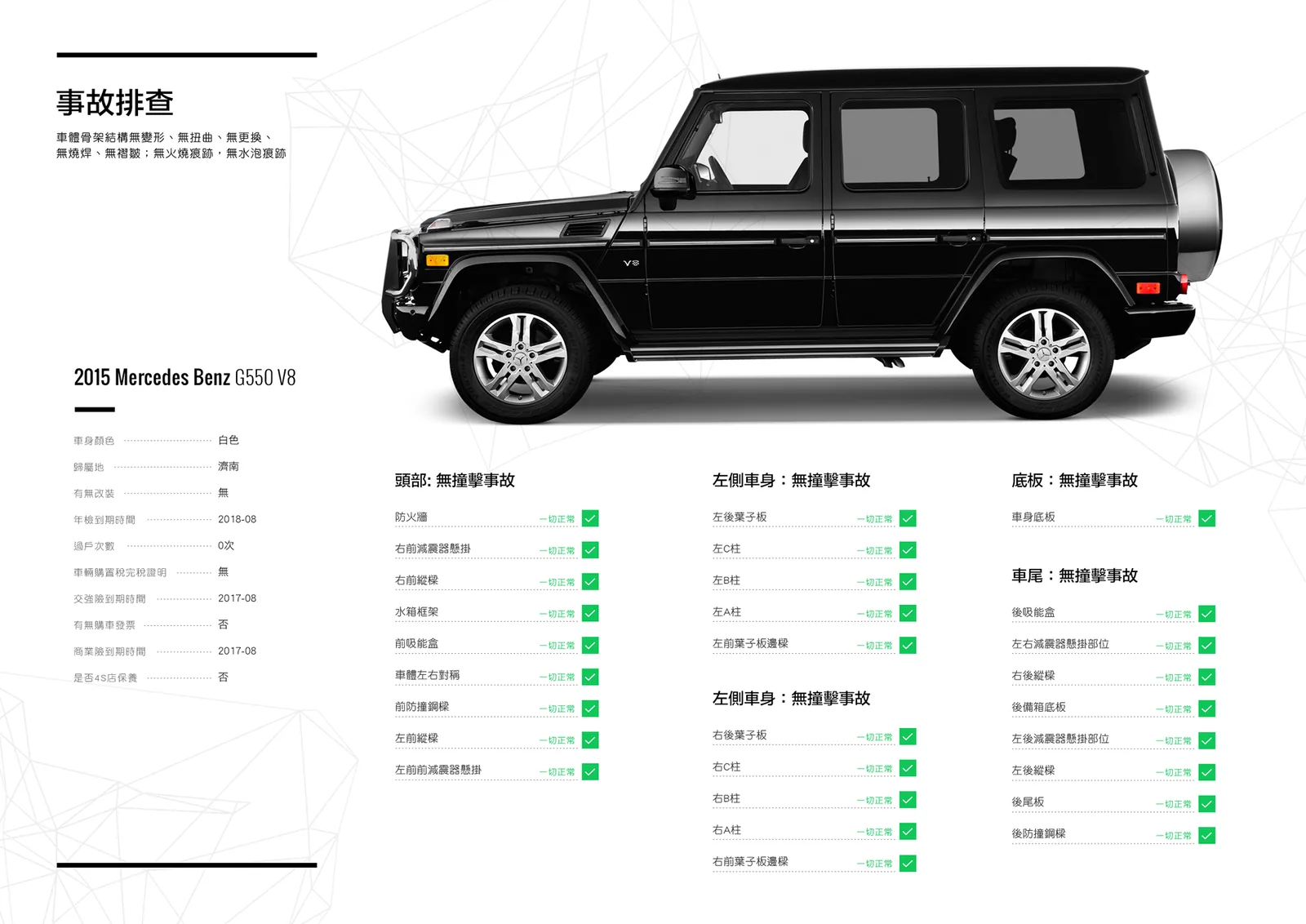
DCBP shipped used cars from the US, Canada, Russia and Europe to buyers in China, and the sales team was burning hours on the phone translating dense inspection booklets no customer could read. I was hired to build a static site that explained the process and looked trustworthy.
02What I found
Buyers assumed every car was a scam
In 2016, buying a used car online in China, often sight unseen and from abroad, felt like volunteering to be cheated. Odometers got rolled back, accident histories vanished, inspection reports were faked or skipped. Buyers had no way to verify anything, so they trusted nothing.
We had no budget to reach rural buyers directly, so I interviewed local dealership owners instead. They dealt with these buyers every day and knew exactly where deals fell apart.
03The reframe
You can't design trust, you remove the risk
No homepage, no matter how clean, talks someone out of a fear that rational. So I stopped trying to look trustworthy and started removing the actual risk. I couldn't fix distrust with a better screen, so I pushed to change the return policy instead.
“I couldn't fix distrust with a better screen, so I pushed to change the return policy instead.”
04Earning the right
Nobody hands the new person a marketplace
I was hired to make a website, not to rethink the business, and the CEO and CTO weren't ready to hear that from someone new. So I shipped first: quite a few smaller pieces of quality work, alongside bigger product ideas, until I had the credibility to pitch the whole platform.
The return policy was the harder sell. In design terms it was easy to launch. It was a business decision, and the team had to be convinced it was the right direction. Once they saw the evidence of customers struggling, they were fully behind it.
05The work
What I shipped
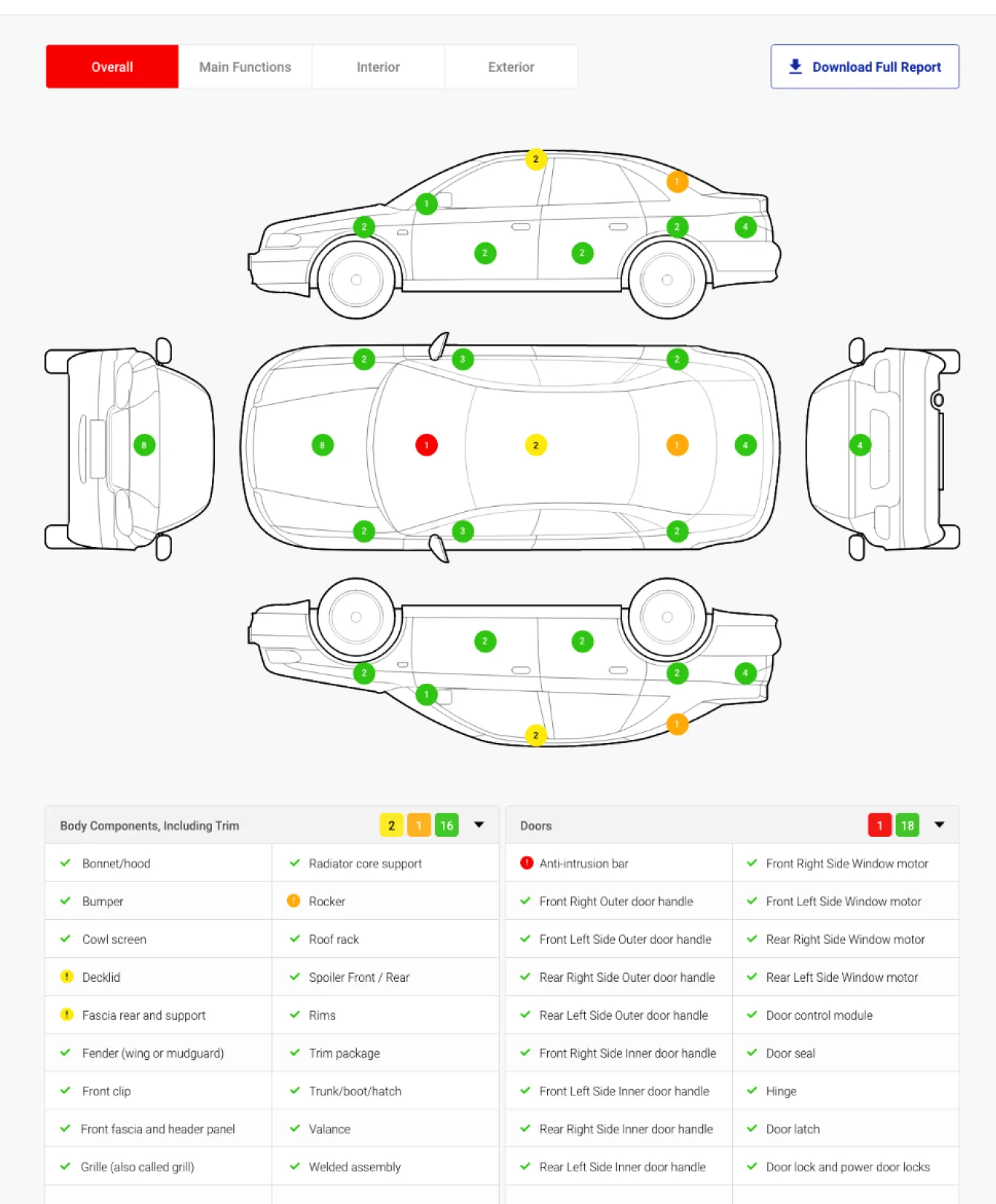
- A visual 156-point inspection: a blueprint-style car diagram with every point color-coded to its spot on the car, damage shown in photos and video, readable at a glance instead of buried in a PDF.
- A 7-day, no-questions-asked return, so a bad decision stopped being permanent.
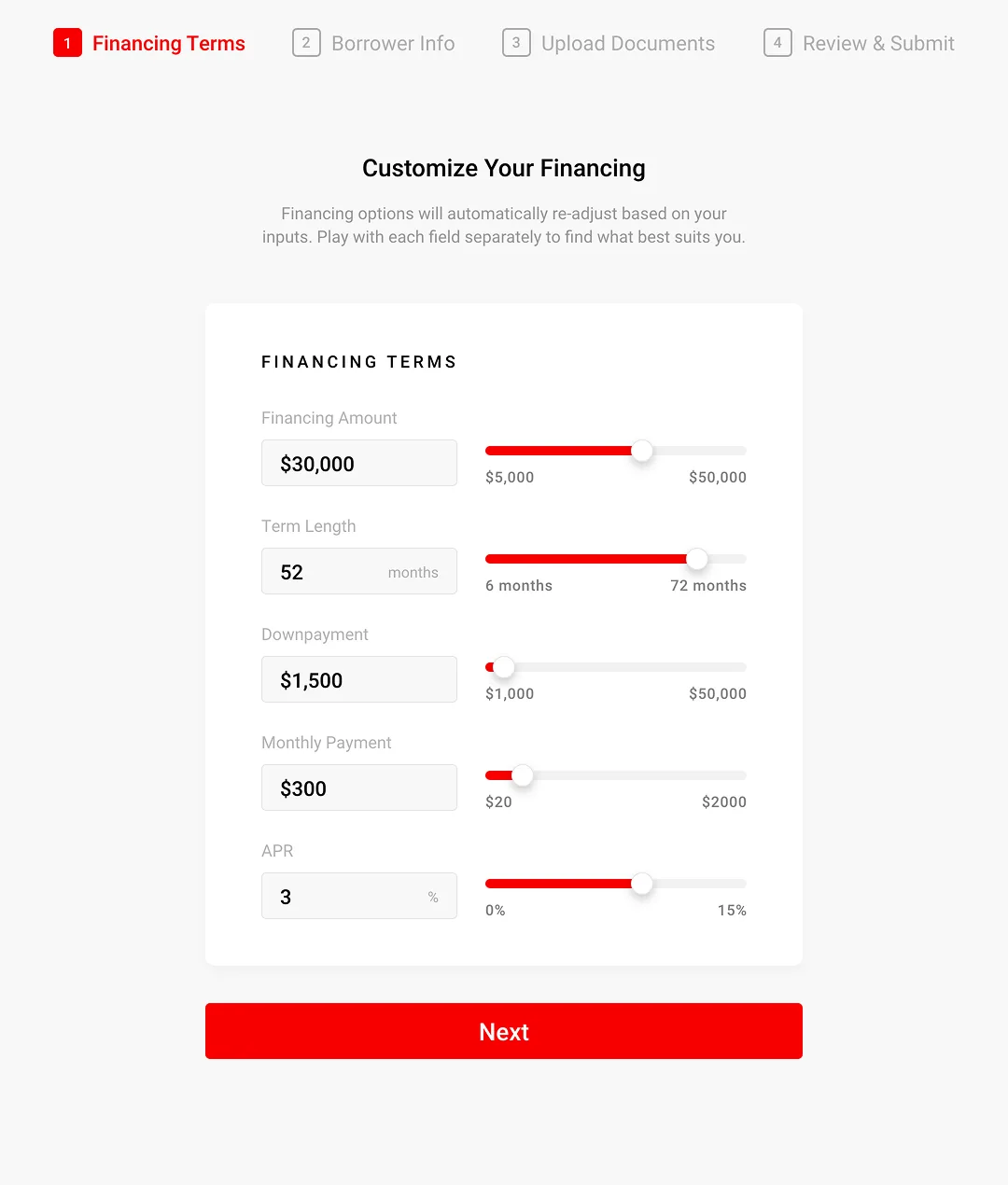
- A loan calculator with live sliders that kept every option inside lender-approved ranges, turning financing from a trap into a set of choices.
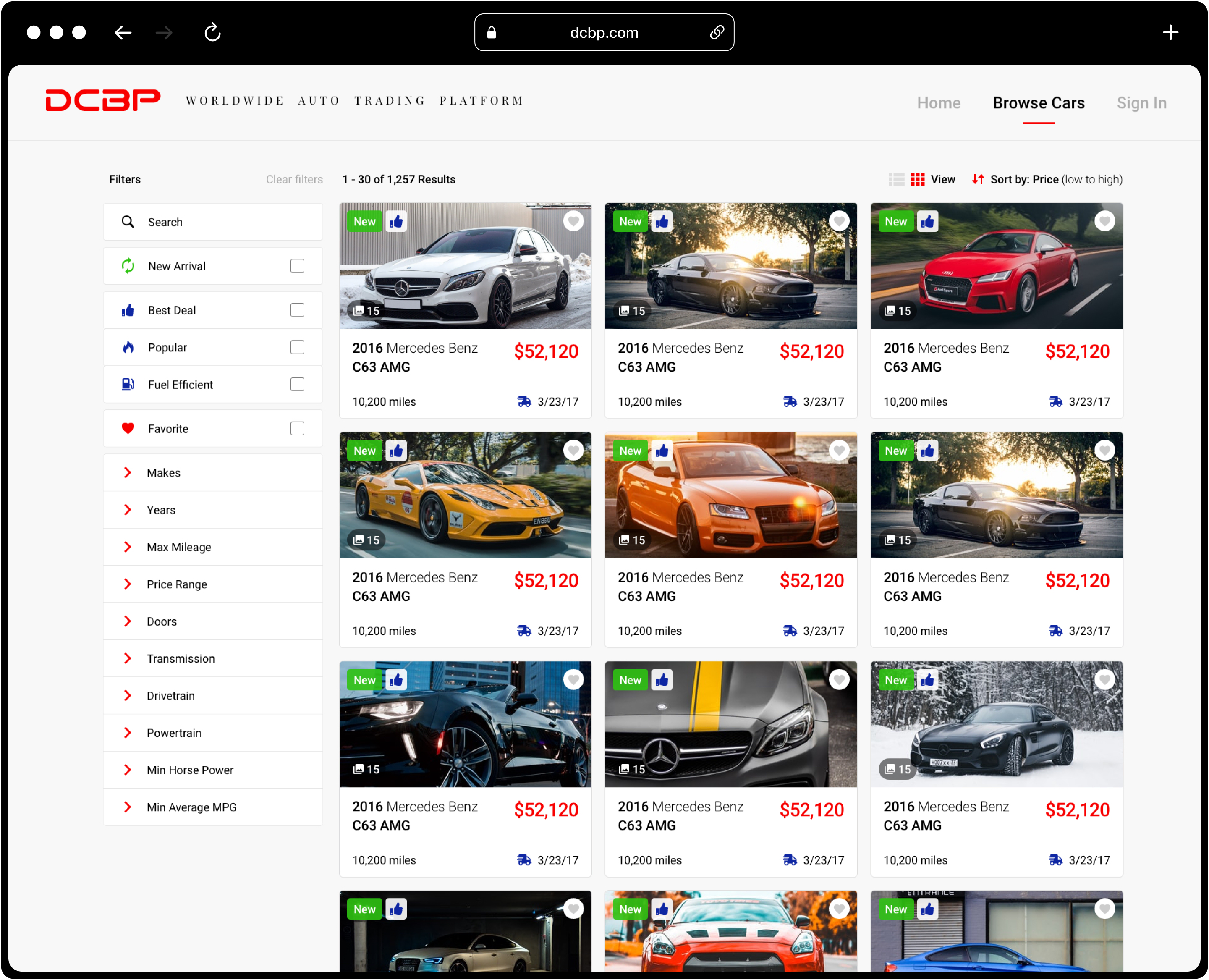
- Value-first browsing by price, savings and lifestyle, so first-time buyers who didn't know makes or models could still explore.
06What never launched
Selling a car in 90 seconds
We also designed the other side: an app that let a seller get a price in 90 seconds. Once we had the car's details, we could calculate a price right away, and it moved within a range: the faster the seller wanted the car gone, the lower the price. It never fully launched. It was closer to a marketing stunt, and we pitched it to investors at TechCrunch Disrupt.
07Impact
Hired for a site, shipped a marketplace
Before I joined, DCBP sold about 2 cars a month. Once the platform was built, it sold about 20. It was one of the first cross-border used-car marketplaces for buyers in China, and it was shown at TechCrunch Disrupt 2016. After launch, the company raised a $5M Series A from the Alibaba Entrepreneurs Fund, one of the biggest raises in Taipei that year.
The principle
When fear is the real barrier, people don't need more cars to choose from. They need fewer reasons to be afraid.
 Van Wang
UI/UX designer to product lead, DCBP