01The brief
Fix a job board drowning in applications
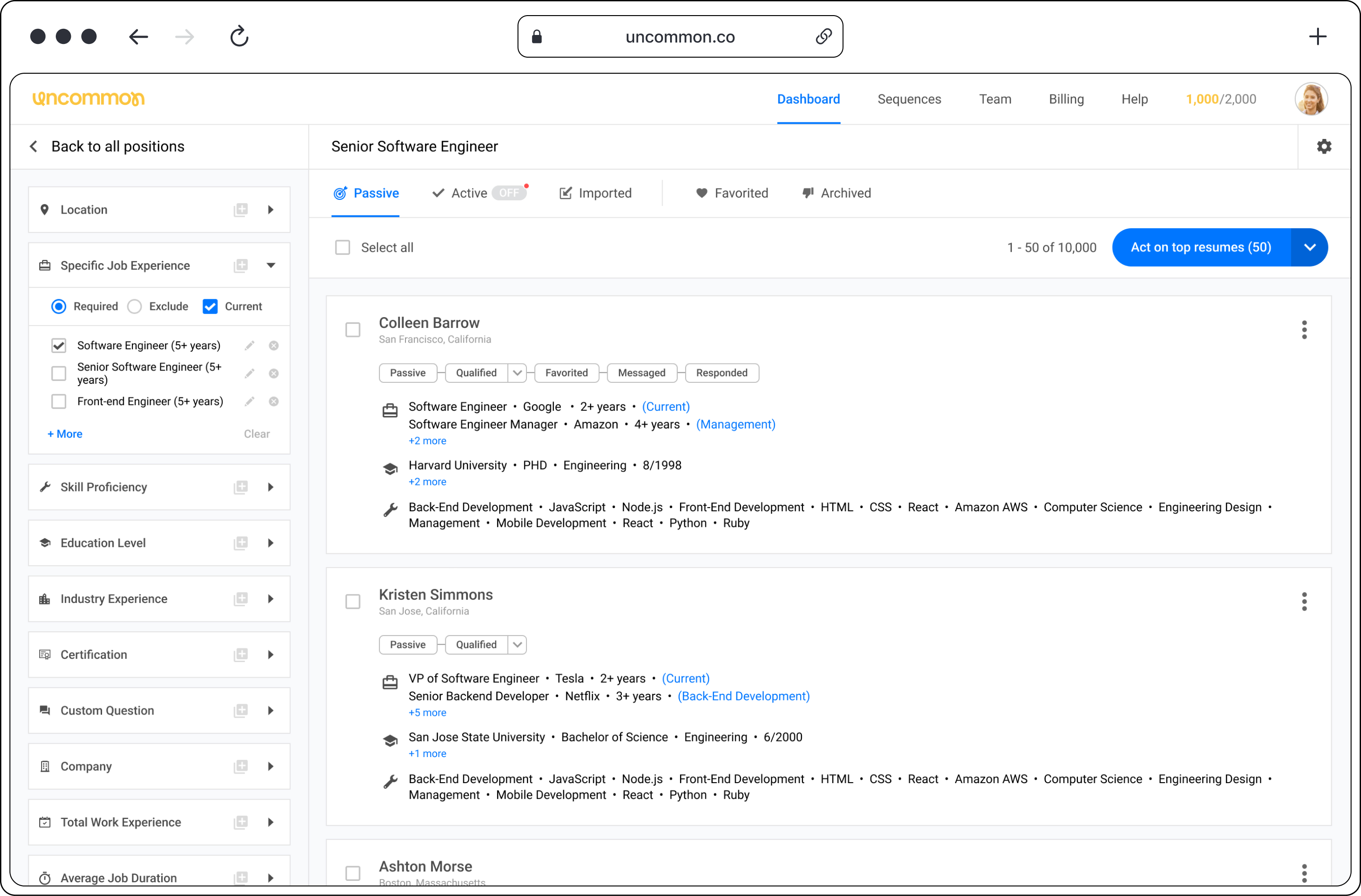
By 2017 one-click applying had buried recruiters in resumes, and the good candidates got lost in the pile. I joined to improve the product, and ended up helping pivot it into something else entirely: an AI tool that matched roles to strong passive candidates instead of waiting for people to apply.
02The first fixes
I built the agreed fixes first. They didn't work.
The team had spent two years on the candidate side of the product, and there was already a list of fixes everyone agreed on. I built those first. They were reasonable, and a new designer who walks in and says the direction is wrong gets ignored. Shipping the agreed list is what earned me the standing to question it.
Then the numbers didn't move.
03The pivot
I brought the problem, not the conclusion
With our product manager, I interviewed everyone in the hiring process and came back with recruiter quotes and real scenarios. I didn't pitch a new strategy. I showed the CEO and the head of engineering the bottleneck, and let them see it for themselves: the leverage was with recruiters, and the product wasn't built for them.
We turned the product around, from a job board for candidates to a matching tool for recruiters. Getting there took two months, and they were long and stressful.
04What we gave up
We stopped being a two-sided marketplace
The pivot had a real cost. We stopped growing our own pool of candidates and brought them in from partners instead. Some still came on their own, but not enough, because recruiter demand grew faster. We went from owning both sides to serving one side and renting the other, which meant candidate quality now depended on partners we didn't control.
We also shipped several features a week and knowingly took on design and technical debt to do it. Speed mattered more than polish while we found out if the pivot held.
05What I built next
Quality over volume
I designed around the moment recruiters actually spend their time, reviewing and validating matches. One candidate at a time, no endless filters, with required feedback on every rejection so the matching got smarter.
06The second surprise
The AI worked, and they trusted it less
Matching was accurate and the workload dropped. Recruiters still hesitated. I kept interviewing after every agreed problem was fixed, and that is when the language turned emotional:
“I feel sidelined.”
“I feel like I'm no longer in control.”
“I feel like I might lose my job.”
Every candidate a recruiter passed up had their name on it, and the machine was making that call for them.
“The real problem was never the workload. It was agency.”
07The work
Put recruiters back in the driver's seat
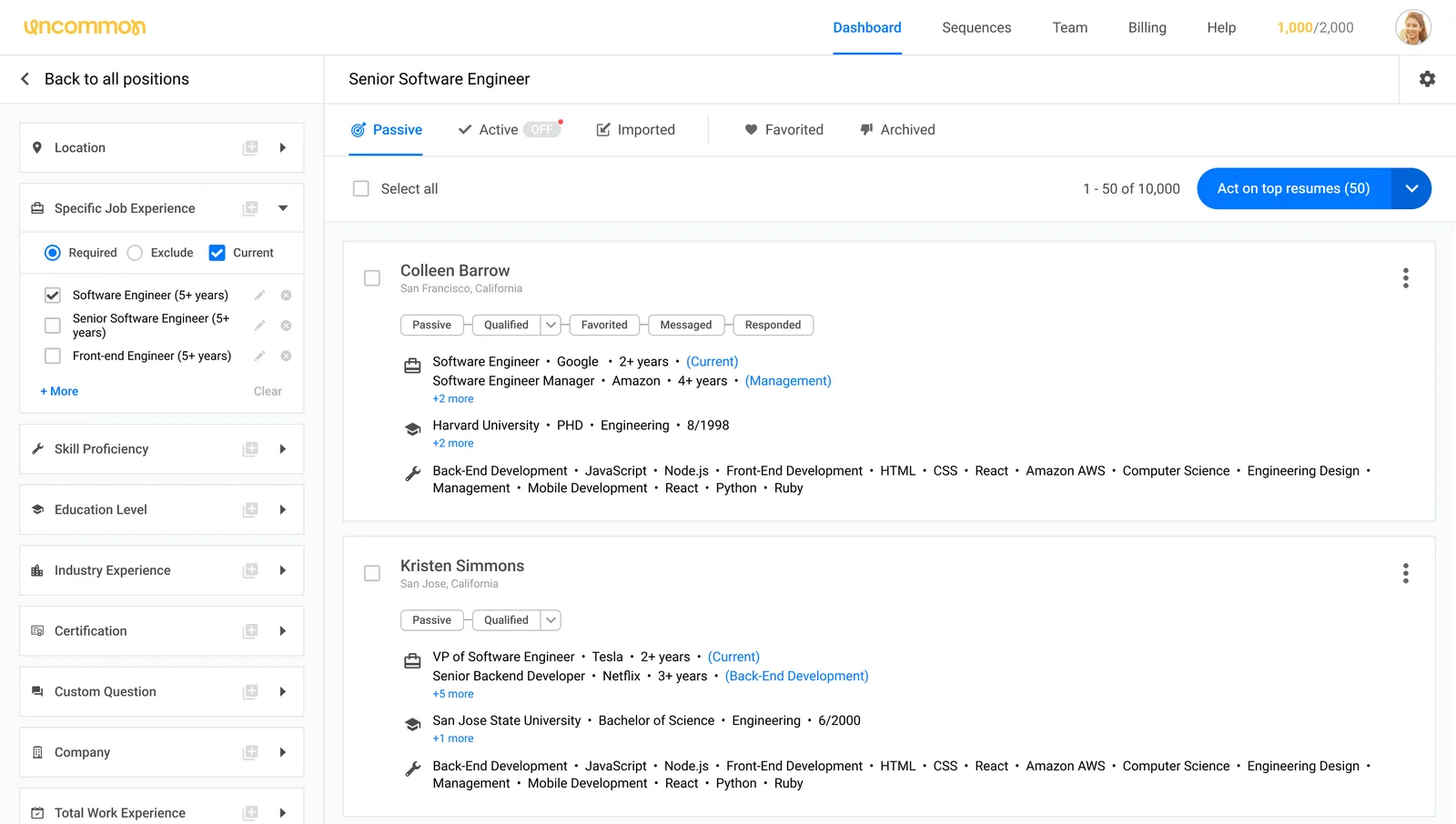
I moved the matching criteria next to the results so recruiters could tune a role and watch matches update live, a tight feedback loop instead of a black box.
- 16 criteria types, each one includable or excludable, for nuanced roles.
- Plain-language criteria, so tuning the AI never felt intimidating.
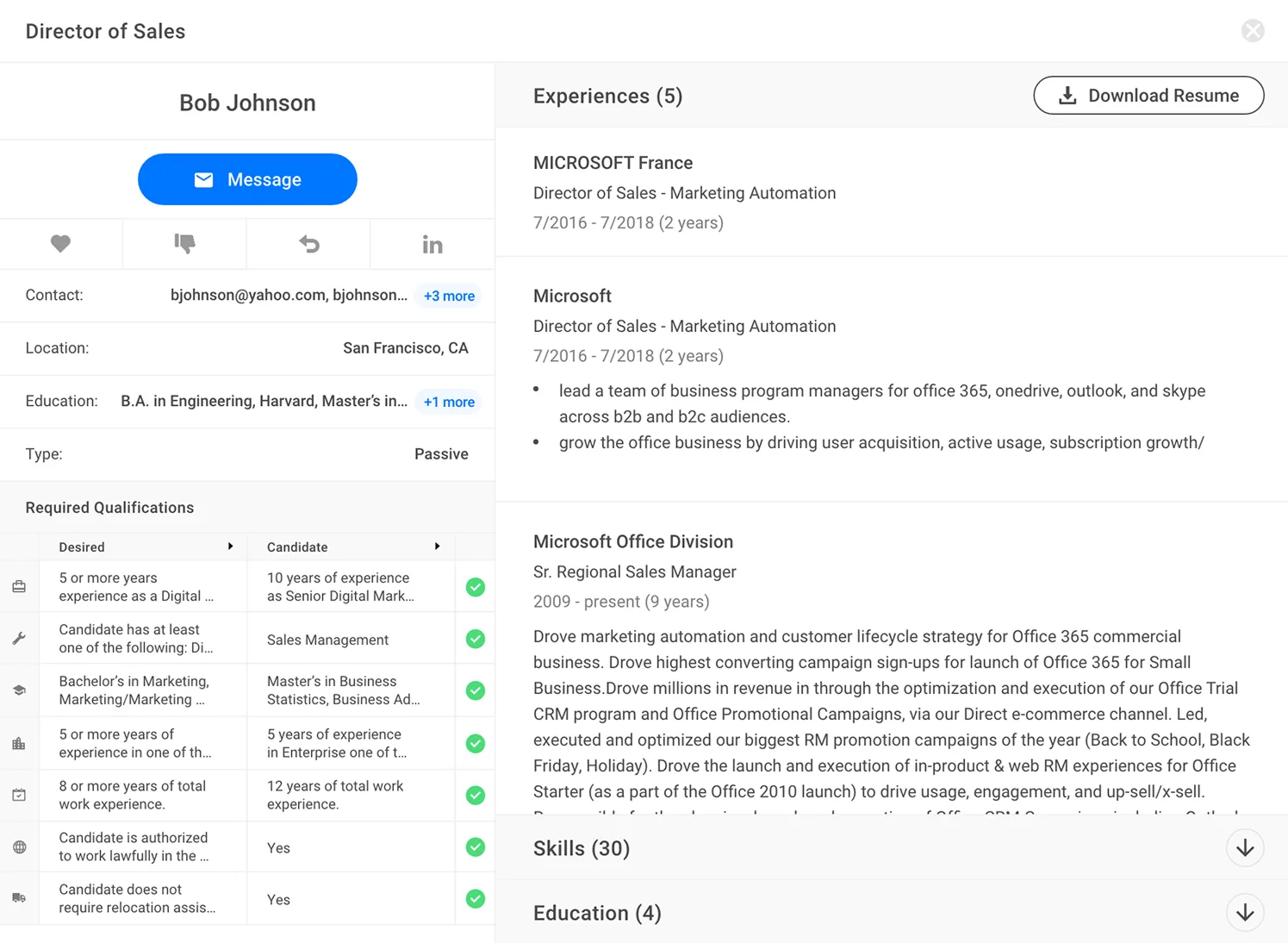
- A candidate detail view that showed which criteria were met and why, with every resume reformatted into one consistent, scannable layout.
- A new design system, started when I replaced the colorful, messy job board look with a calm workspace that fit recruiters. Working alone and fast, I kept it basic: a shared library of the components we built, so engineers reused them instead of rebuilding.
08Impact
The controls were how trust got built
At first recruiters used the controls to close small gaps. As the matching learned from their input, they trusted it more and stepped back on their own after the first few roles. The controls weren't a compromise. They were how people learned to trust the machine.
More than 200 recruiting clients came onto the platform, averaging about 8 hires a month across it, and the pivot helped the company raise $18M. A job board became an AI recruiter in eight months.
The principle
The complaint you're handed is rarely the problem you're solving. Keep probing after the obvious fix lands, because the real need is usually the one nobody said out loud.
 Van Wang
Sole designer, Uncommon