01The brief
Make a scary hiring form easier to finish
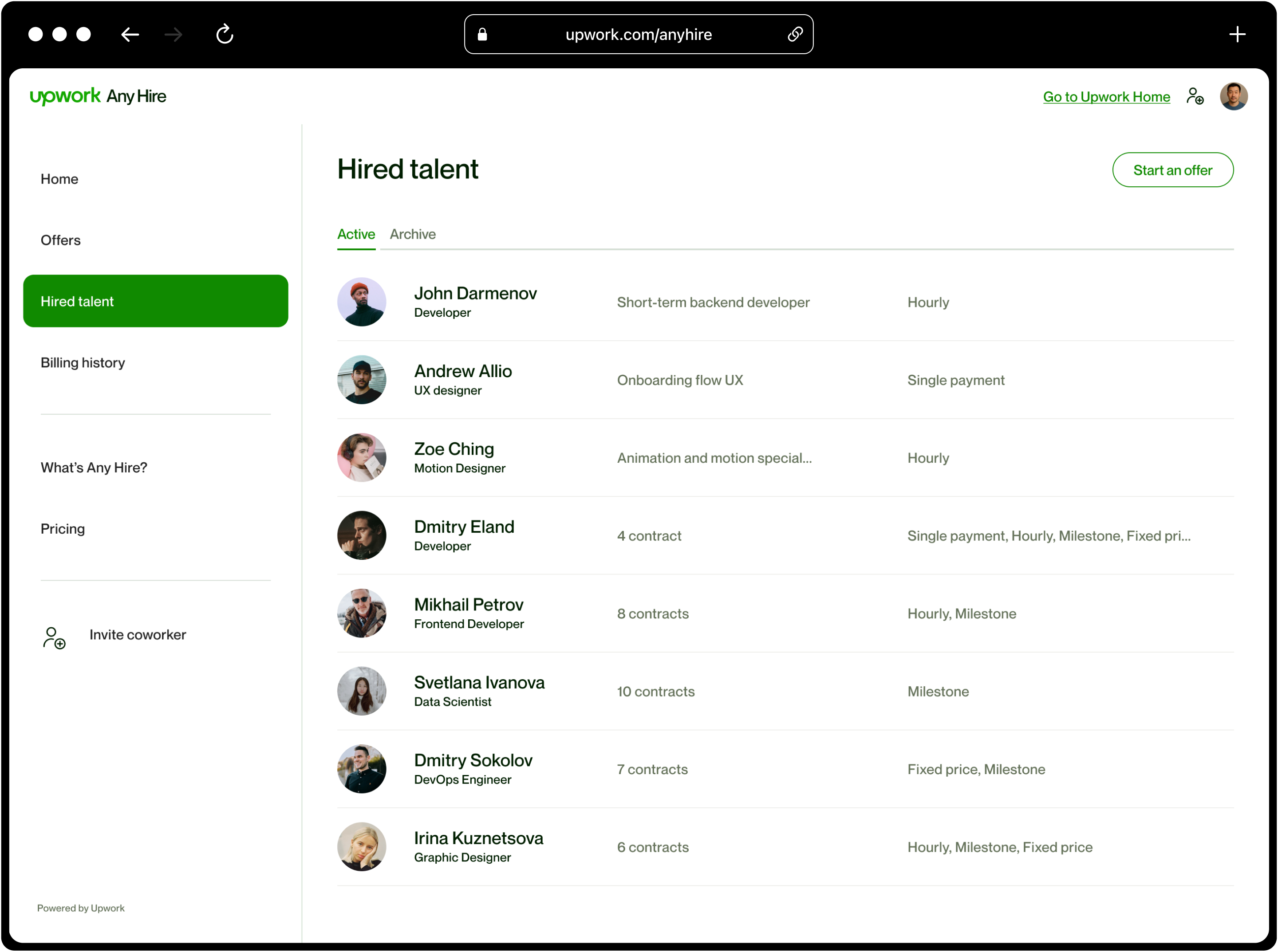
Upwork was expanding into global payroll with AnyHire, a product that let businesses hire and pay freelancers abroad. The onboarding form was long and people dropped out of it. I was brought in to smooth that out.
02What I found
The form wasn't the problem. One step was.
The research behind the first version had been verbal and hypothetical: people said what they would do, and nobody watched what they did. As a new hire, I pushed for behavioral research instead, with real users walking through every step.
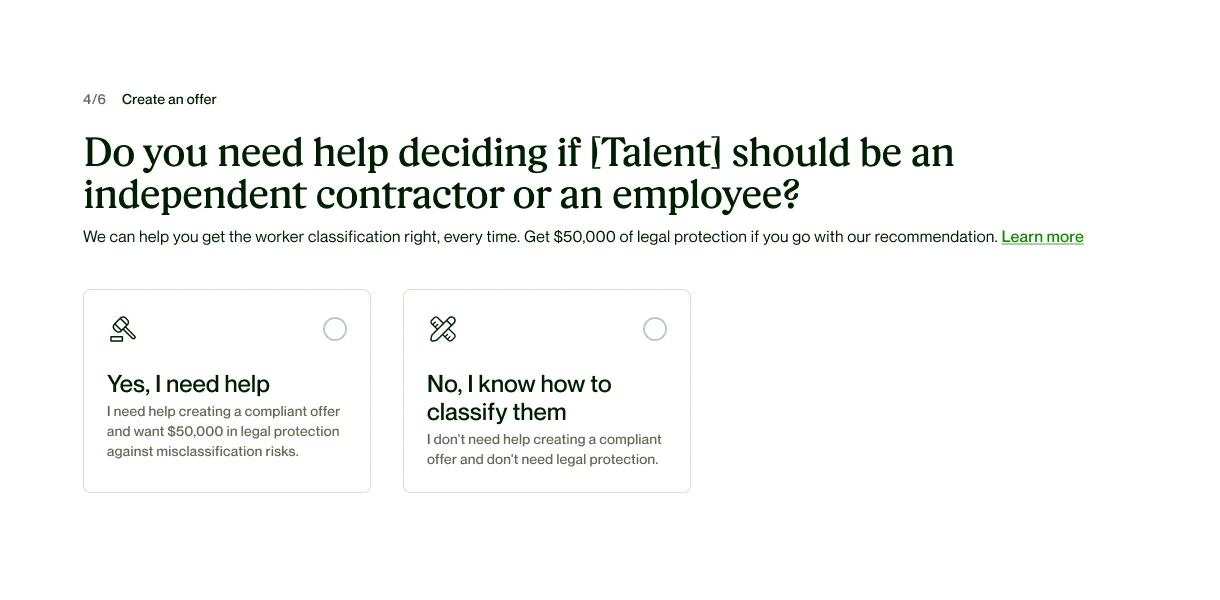
The snag sat near the end, in a required classification step where clients had to declare whether a worker counted as an employee or a contractor. For experts who already knew the answer, being forced through it felt like being quizzed on their own job.
03The reframe
That step wasn't advice, it was liability
Classification looked like helpful guidance. It was really deciding who was on the hook if a worker was ever misclassified, a legal and financial call dressed up as a form field. Treating it as advice made confident users feel second-guessed, and made unsure users commit to something they didn't understand.
04Pushing back
The PM said no, so we met in the middle
Classification was required on purpose. No competitor offered it, so product saw it as AnyHire's edge, and the PM had the whole team behind it. When I proposed making it optional, the PM pushed back.
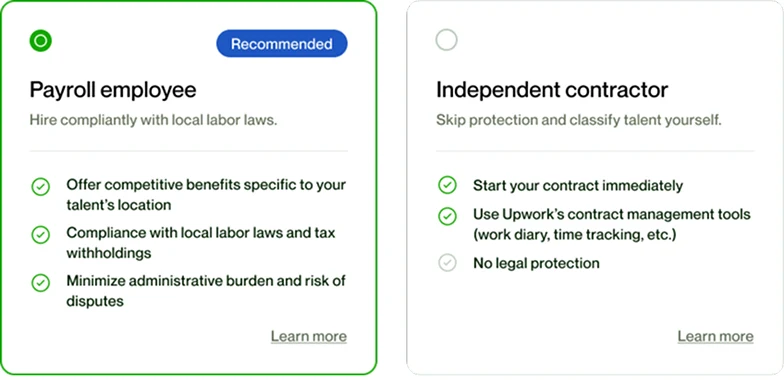
So I started smaller. Most clients didn't even know they could override the recommendation, because the way to do it was hidden. I turned the decision into a toggle with the difference between the two choices spelled out inside it, so anyone could compare and override with confidence.
05What the data said
More clients overrode it than accepted it
Once overriding was easy, more clients overrode our classification than accepted it. That was the evidence the PM needed, and they backed making classification fully optional.
The team already ranked work by impact against effort, and this landed near the top: little effort, big impact. The ranking set the order. Watching real users proved the case.
“More clients overrode our classification than accepted it.”
06The work
What I shipped
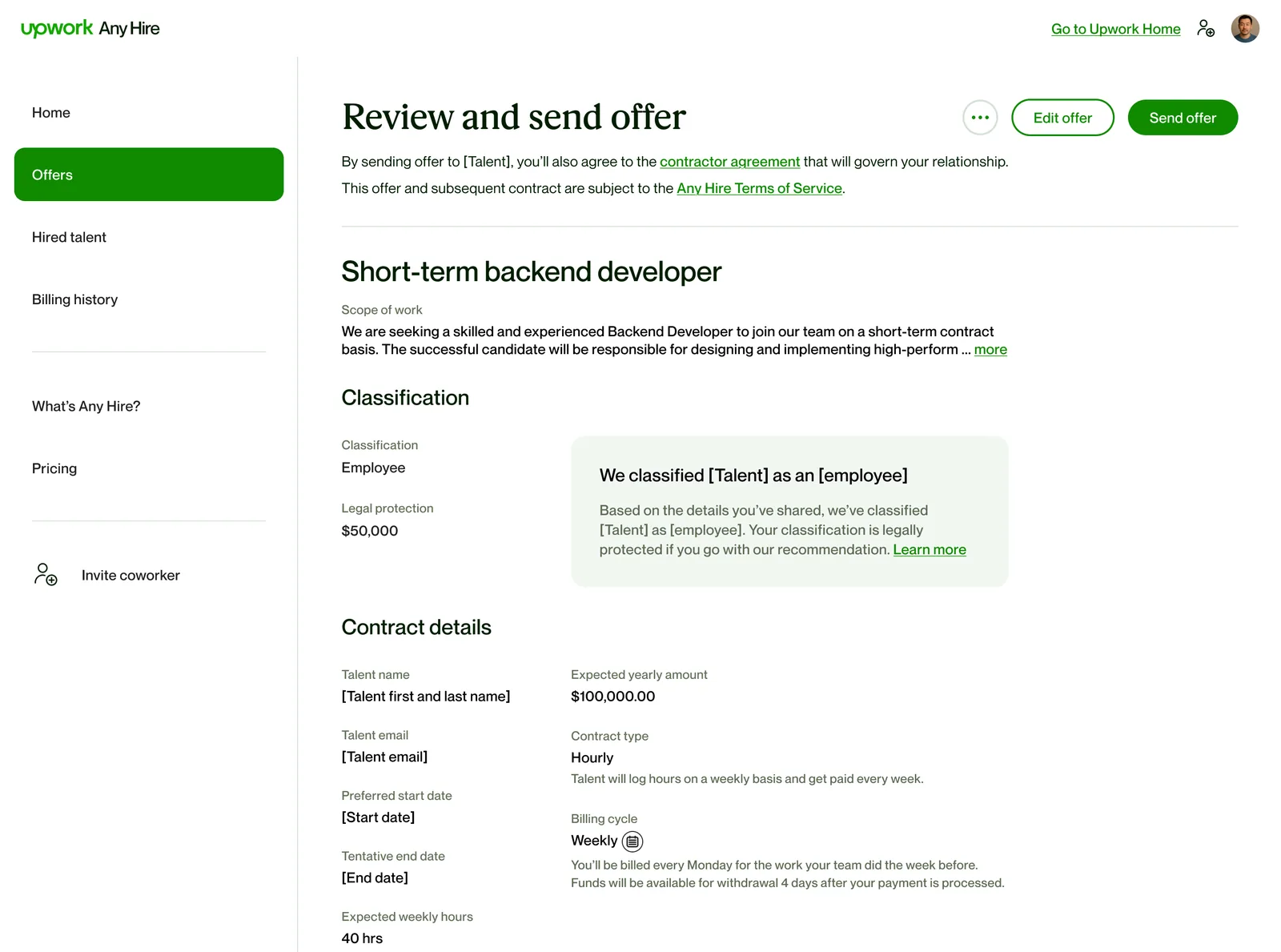
- Made classification optional, so experts move fast and only the unsure get walked through it.
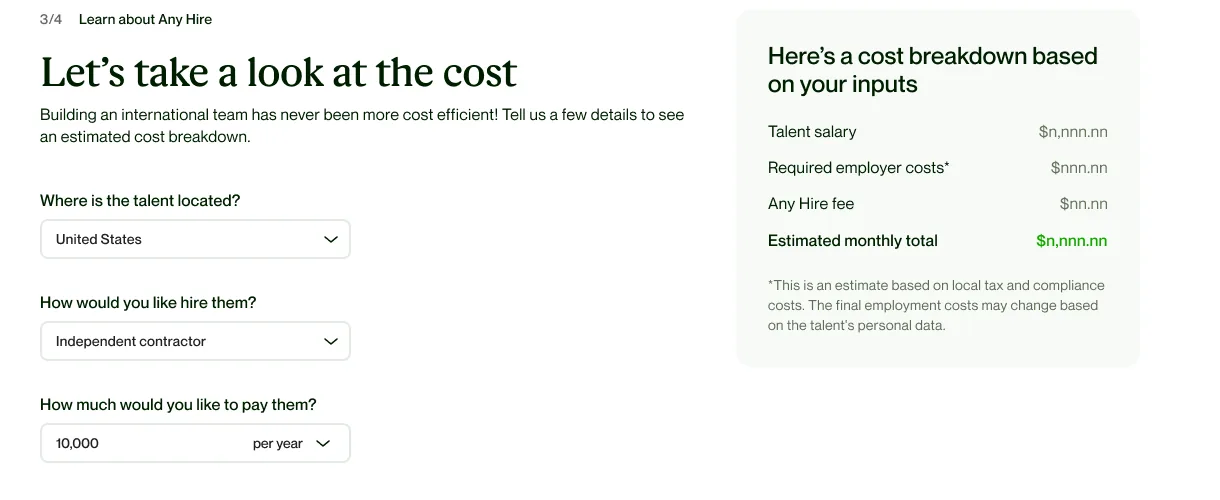
- Added a one-time intro that sets expectations and shows cost early, before the first hard decision.
- Rebuilt the long form into a clear step-by-step flow from Upwork's design system, and worked with the design system team to add a custom component where nothing in the system gave the right experience.
07Impact
It uncovered a new revenue stream
At a 10% rollout the flow added 250 clients and lifted form completion by 40%. Making it easy to hire full time also set off a spike of existing clients turning their freelancers into full-time hires, which quickly became a new revenue stream for the company.
The principle
Friction is worth it when it buys clarity, and costly when it makes an expert prove they belong. Slow the step down where the stakes are high, and get out of the way where they aren't.
 Van Wang
Lead designer, Upwork